Walk into a tidy electrical vault and you can feel the difference in your shoulders. The air is cooler. The hum is steady and unremarkable. Labels line up, conduits run with intent, and the floor isn’t wearing a crunchy carpet of dust. Now picture the opposite: lint clinging to cable jackets, standing water flirting with bus bars, loose vermin bait stations, and a breaker panel door that sticks because the hinge is camouflaged by grime. Both rooms can operate today. Only one is likely to operate five years from now without a dramatic, budget-busting interruption.
Vault cleaning sounds like housekeeping. It is asset protection. Done properly, it stretches the useful life of switchgear, transformers, and controls, and it trims downtime that never seems to pick a convenient hour. Whether you manage a multi-tenant high-rise, a hospital campus, or a warehouse full of impatient forklifts, the vault sets the tone for every circuit downstream.
This is a practical guide from the field. I have scraped mud off transformer pedestals after an early thaw, chased dust bunnies the size of raccoons out of fan shrouds, and watched a $40 gasket avert a five-figure failure. If you’re here for theory, there is some. If you want to know which broom to buy, there is plenty of that too.
What makes a vault dirty, and why it matters
Two ingredients create most of the trouble: dust and moisture. Dust settles on insulation and conductors, then absorbs humidity and becomes a semi-conductive layer. That encourages tracking, which is the polite term for electricity trying to find shortcuts across surfaces where it shouldn’t. Add in corrosion from moisture, and you have a recipe for heat, nuisance trips, and eventual failure.
Rodents and insects contribute more than you’d think. I have opened cabinets to find sunflower seeds stacked like cordwood around power supplies. Urine is corrosive. Nesting material blocks ventilation. Even if you never see a whisker, the telltale is often chewed grommets or droppings near warm equipment.
Traffic is another culprit. Vaults double as unofficial storage rooms when space is tight. Buckets, paint, spare tile, and holiday decorations migrate in, get stacked, and start shedding dust and debris. Every box you store near an intake fan eventually shares its contents with the bus bars.
Last, ventilation and temperature swings push and pull. Negative pressure can draw dust from loading docks or parking garages. Poorly set economizers or leaky dampers invite damp air during spring and fall shoulder seasons. Any time you cross dew point inside a vault, that shiny insulation starts wearing a watercolor wash.
If this sounds like scolding, it’s not. It’s pattern recognition after years of Emergency Electrical Services at ungodly hours. Electrical Maintenance Services work best when the basic housekeeping is baked into the calendar, not the incident report.
The quiet math of longevity
Manufacturers test equipment in labs that resemble tidy vaults. Clean air, controlled temperatures, and proper clearances. In the wild, every degree over the design temperature and every layer of grime trims lifespan. A solid rule of thumb: for many types of electronic components, every 10 Celsius rise in temperature can halve expected life. Dirty filters and dust-matted heat sinks can push you uncomfortably close to that line.
Insulation is similar. Tracking and corona discharge do not usually announce themselves with fireworks on day one. They chew away slowly, roughing up surfaces and leaving carbon paths. The part fails in year nine instead of year sixteen, and the post-mortem shows nothing dramatic on first glance beyond a line of dust that shouldn’t have been there. Vault cleaning is not glamorous. It is time, air, and patience converted into years on your capital plan.
What’s actually involved in electrical vault cleaning
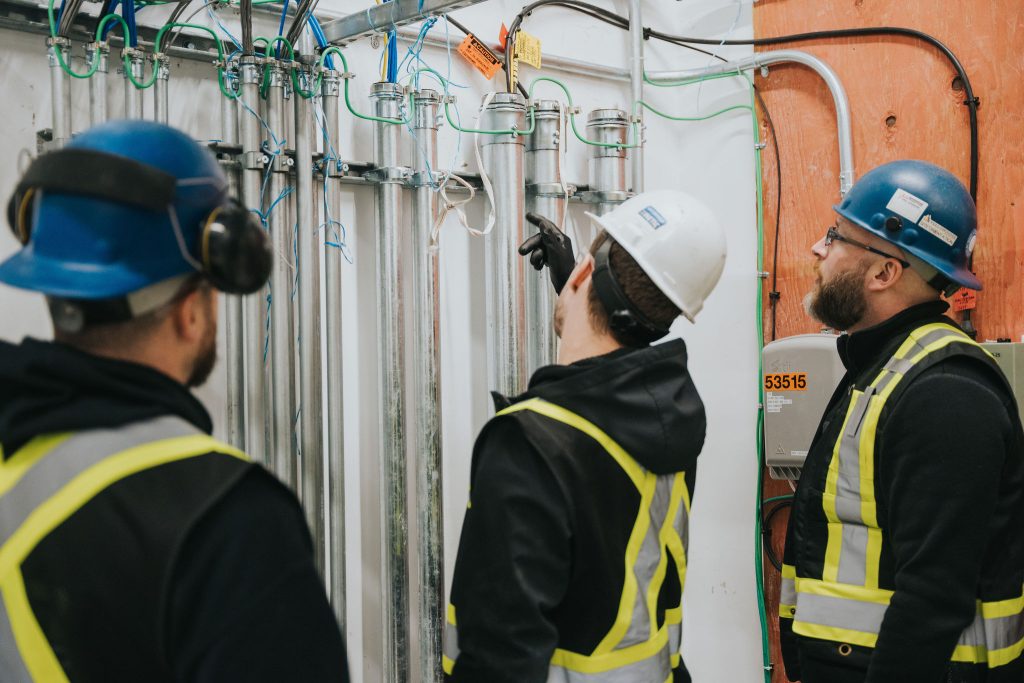
Before anyone touches a rag, a licensed Commercial Electrician or Residential Electrician team walks the space. Identify sources, not just messes. Look for water entry points, failed seals, unfiltered intake louvers, or mismatched gaskets. A good contractor like TDR Electric starts with photographic documentation, then a game plan that prioritizes safety and sequence.
You do not power-wash a vault. You use vacuum cleaners rated for fine dust with conductive hoses, anti-static attachments, and HEPA filtration so you’re not just redistributing yesterday’s grime. Dry methods dominate. Compressed air is useful but risky if you drive dust deeper into equipment, so it’s used with proper extraction and never near energized components without a plan.
On energized gear, cleaning is surgical. Non-conductive brushes and lint-free cloths, careful movements, and a constant eye on clearances. On de-energized gear, we do more: removing panel covers, inspecting bus connections, retorquing to manufacturer specs where allowed, and cleaning inside enclosures. If arc flash PPE feels like overkill for dusting, that feeling fades the first time you hear a sizzle you didn’t expect. Procedures exist because people like to keep their eyebrows.
Floors matter more than most people think. Every foot that enters carries grit, and every footfall kicks that grit back up. Sealed floors make cleaning easy and reduce dust reservoirs. If your vault floor looks like potting soil, you are funding your own failures.
Lighting and labeling get updated during cleaning because you see everything fresh. Heat maps from an infrared scan guide extra attention. A breaker that runs ten degrees warmer than its twins next door is asking for a torque check, a contact inspection, or a load balance review. Pair cleaning with thermography and you multiply the value.
Frequency: not one-size-fits-all
I favor risk-based calendars. Start with quarterly inspections in harsh environments: garage-adjacent rooms, food processing facilities, or coastal buildings with salt air. Semiannual makes sense for most commercial interiors with good filtration. Residential vaults or main rooms in clean, sealed spaces can stretch to annual, provided you document stable conditions and have a Residential Electrician walk it at least once a year.
Seasonality matters. I like a pre-summer cleaning to get dust off before the heat load arrives, and a post-fall pass to catch debris brought in during tenant build-outs, also known as Tenant Improvements. If your facility runs major projects, schedule a cleaning right after the trades leave. Drywall dust is merciless.
Safety is not negotiable
If I’ve learned anything from arc flash training, it’s that comfort breeds shortcuts. A vault looks friendly after a hundred uneventful visits. That is the moment to pull the laminated procedure from the wall and read it anyway.
Lockout/tagout is step zero when gear will be opened or handled. Confirm and test for absence of voltage. Arc flash labels guide PPE, and if the labels are missing or outdated, pause and correct that. Use insulated tools. Keep conductive cleaning tools out of the room, no matter how convenient that steel-handled shop vacuum seems. Never stand water inside the vault, not for mopping, not for any reason. A damp microfiber cloth beats a wet mop every time.
If you bring in a contractor, ask about their specific vault-cleaning SOP, not just “we clean panels.” Listen for details like vacuum types, brush materials, and disposal of debris. A team that takes pride in the boring details is the team that will leave you with boring maintenance logs and no 2 a.m. phone calls.
The domino effect: from vault to the rest of the building
A clean vault helps everything downstream. Trip settings stay stable. Drives run cooler. UPS units go longer between fan replacements. Your Surge Protection Installation does its job without fighting corroded lugs. Smoke Detector Installation stays free of dust that would otherwise cause false alarms. When the vault breathes well, demand peaks plateau, which helps your power factor correction and utility costs. It’s not magic. It’s the absence of friction.
On the residential side, homeowners rarely see their main electrical rooms as part of a wellness plan for the house, but they should. A tidy panel space reduces nuisance trips when you add EV Charger Installations, Smart Home Device Installation, or a Home Generator Installation. Smart Thermostat Installation gets all the attention, yet the thermostat is only as smart as the circuits feeding the air handler. Keep the hub clean if you want your gadgets to behave.
What we find when we clean
A few greatest hits from the field:
- On a rainy spring day in a mid-rise, we found a hairline crack in a conduit sealing fitting, just above the slab. The dust line on the wall looked like art until we noticed the rust bloom. That 30-minute fix probably saved a Saturday outage and a new set of MCC buckets. In a logistics center, a salt crust had painted itself onto the lower half of a transformer, courtesy of winter snowmelt tracked in by pallet jacks. We cleaned, applied a protective coating, and installed better mats and door sweeps. Temperatures dropped 5 to 7 Celsius on subsequent scans. Fans got quieter, and so did the maintenance manager. A medical suite had added imaging equipment without updating labeling or balancing loads. The vault was clean, but our infrared scan during cleaning found three hot lugs on a panelboard. Cleaning time turned into a quick re-termination and a conversation about load studies. Problem solved before it made the news.
A pattern emerges. Cleaning exposes stories. Most of them end with a relieved sigh and a photo for the maintenance file.
The business case that actually convinces finance
If you present vault cleaning as an expense, it gets treated like a nice-to-have. So frame it as life extension and risk reduction, because that is what it is. Spread the initial cost over the equipment replacement horizon. A main switchboard might be a six-figure item with a 20 to 30-year design life. If a modest annual cleaning helps you hit the high end of that range instead of the low, the math writes itself.
Then measure. After a year of consistent Electrical Maintenance https://griffinlwmy239.theburnward.com/smart-thermostat-installation-smart-zoning-and-controls Services, compare nuisance trips, work orders tied to overheating, and hours spent on Emergency Electrical Services. If you add even one more business day between unplanned outages, you have paid for several cleanings. Facility directors quietly know this. Numbers help them say it out loud in budget season.
Small upgrades that make cleaning stick
Three low-drama improvements turn a one-time cleanup into a sustainable practice.
First, filtration and airflow. Add or upgrade intake filters on vault ventilation. Use a manometer or differential pressure gauge and log it monthly. If filter swings get dramatic, you have a source nearby to address. Sometimes that means sealing a wall penetration or adding a door brush. Sometimes it means asking the auto shop downstairs to change their floor sweep schedule.
Second, lighting. Poor light hides dust and leaks. LED fixtures with a neutral color temperature and high CRI reveal what needs attention without creating glare. Add task lights over panels if the general lighting sits behind the tech’s shadow.
Third, labeling and barriers. Clear labels keep panels closed because people spend less time hunting. Simple bollards or rails keep carts away from cabinets, which reduces dings and scratches that become rust points.
While you’re at it, loop your service partner into other projects that tie back to electrical health: Solar Panel Installation planning, EV Charger Installations layout, or Tenant Improvements schedules. The crew already familiar with your vault will notice early signs and route work to protect the space.
How often to pair cleaning with testing
Not every cleaning needs a full suite of tests, but you want a cadence. Infrared scans pair beautifully with cleaning, at least annually. Torque checks depend on manufacturer guidance and history. Insulation resistance tests and ultrasonic scans make sense on a multi-year cycle or when you inherit a building with a murky maintenance past. Think of it like a medical checkup: vitals every visit, labs on schedule, scans when symptoms crop up.
If you run a campus with critical loads, take a cue from hospitals and data centers. Build a rotating plan where sections of the system go de-energized for deep cleaning and maintenance during scheduled windows. Your Commercial Electrician will help stage temporary power or generator support where needed.
What to avoid while cleaning
Temptation lives in convenience. Don’t grab consumer-grade shop vacs. Their hoses can build static and discharge where you least want it. Avoid aerosol cleaners with unknown residues. Some leave films that attract dust and increase tracking. Skip glossy floor finishes that turn slick under humidity. And never use brooms that shed, especially near open equipment. The bristles have a way of migrating to fan guards and relays.
Equally important, resist turning the vault into a storage locker. No cardboard, no spare lumber, no paint. If space is tight, install steel shelving for electrical spares only: breakers, fuses, gaskets, and labeled cable lugs. Even then, keep shelves away from airflow paths so you don’t create lint traps.
A short, practical vault-cleaning cadence
Here is a compact routine we’ve refined at TDR Electric for steady-state operations in typical commercial settings. It adapts well for residential main rooms with scaled timing.
- Weekly quick pass: peek at floors, check for debris around intakes, confirm doors close smoothly, and note unusual odors or sounds. Monthly touch: vacuum floors and corners, wipe exterior cabinet surfaces with dry microfiber, and photograph any new stains or rust. Quarterly detail: HEPA vacuum tops of enclosures and conduits, clean intakes and louvers, and inspect door seals and gaskets. Semiannual inside look: with proper lockout and a licensed Electrician Services team, open representative panels, clean interiors, verify labeling, and perform a thermal scan while re-energized. Annual review: sit down with logs, trend temperatures, review incidents, update the cleaning plan, and budget parts replacements that prevent surprises.
Keep the list short on purpose. The best program is the one that happens.
How vault cleanliness supports modern upgrades
Every year brings new demands on the electrical backbone. EV Charger Installations add load diversity and peaks that never existed in older buildings. Solar Panel Installation introduces backfeed considerations and requires pristine terminations and protective devices to behave. Smart Home Device Installation and Smart Thermostat Installation stack sensitive electronics onto circuits that appreciate clean, cool rooms. A Home Generator Installation only helps if switchgear and transfer switches operate flawlessly, which again asks for dust-free, corrosion-free interiors.
Cleanliness is not optional for these upgrades. It’s the substrate that lets them shine. A dusty vault is like a cluttered kitchen when you’re trying to cook for a crowd. You spend more time clearing space than plating dishes.
Common objections, answered with field reality
We hear two refrains. The first: we can’t take the power down. Fair. You can still do a lot energized with trained techs and proper PPE, including external cleaning and airflow fixes. Then plan selective de-energized windows on a rotation. A couple of hours twice a year per section beats a day-long unplanned outage.
The second: it looks fine. That’s like saying your car runs fine while the oil light flickers on hills. The vault often looks fine right up to the moment it doesn’t. Dirt telegraphs its impact through heat, smell, and trip frequency before it becomes dramatic. Measure those, not just your gut.
Signs your vault is asking for attention
If any of these pop up, elevate priority:
- Slightly sweet or acrid odor during heavy load periods, especially near older switchgear. Warm cabinet doors without corresponding ambient temperature rise. Frequent arc-fault or ground-fault trips with no obvious downstream cause. Rust trails or chalky residue under conduits and around wall penetrations. An infrared scan that shows consistent hot spots and asymmetries between similar components.
You don’t need panic. You need a date on the calendar and a partner who brings the right tools.
Where a professional adds real value
A diligent facilities team can keep floors spotless and intakes clean. Bring in a licensed Commercial Electrician for the parts that involve opening gear, assessing insulation, retorquing, and interpreting thermal patterns. The difference between tidy and truly safe is experience. When to replace a discolored lug versus clean it, when to recommend Surge Protection Installation upgrades after evidence of transient activity, when to relocate traps or seal holes to deter rodents without blocking airflow, these are judgment calls made better by repetition.
Firms like TDR Electric bundle Electrical Maintenance Services with long-view planning. If we see recurring moisture marks, we look beyond the mop to the roof drains, the grade outside, or the HVAC economizer schedules. If we notice mismatched cable jackets, we dig into record sets to ensure everything meets code and the environment. Cleaning is the doorway into knowing your system. With knowledge, you steer capital toward the right problems.
Make it culture, not a chore
The best vaults I’ve seen feel cared for. There’s a logbook on a shelf, with neat handwriting and short, clear notes. Labels are current. The same small broom hangs on the same hook every visit. Someone decided this room matters, and everyone respects that decision. New hires pick it up quickly, especially when leadership praises a boring monthly photo of a clean floor as much as a flashy project ribbon cutting.
If you want a place to start, pick one vault, give it three hours with a HEPA vacuum, microfiber cloths, and a camera. Fix one airflow leak and one label set. Then open the main panel, with the right PPE and a licensed tech, and do one thoughtful interior cleaning. Take a thermal scan the next day during a good load. Watch the picture tell you what to do next.
Extend equipment lifespan is not a slogan. It is sweeping, sealing, tightening, and listening, repeated on schedule. It is less drama, more weekends at home, and capital that shows up where it makes a difference. That’s the quiet payoff of Electrical Vault Cleaning, and why it earns a permanent line on the calendar.
Name: TDR Electric Inc.
Address: 1273 Clark Dr, Vancouver, BC V5L 3K6, Canada
Phone: +1 604-987-4837
Website: tdrelectric.ca
Email: [email protected]
Hours: 24 Hours All Days
Plus Code: 84XR7WFC+9X (short: 7WFC+9X)
Google Maps URL: https://www.google.com/maps/place/TDR+Electric+Inc./@49.273397,-123.0801556,17z/data=!3m1!4b1!4m6!3m5!1s0x5486704eeda05d95:0xf424cd92195e1778!8m2!3d49.273397!4d-123.0775807!16s%2Fg%2F11b7y791rn
Map Embed:
Socials:
https://www.facebook.com/TDRelectric/
https://www.instagram.com/tdrelectric/
https://www.linkedin.com/company/tdr-electric-inc/
https://www.youtube.com/@TDRElectricInc
TDR Electric Inc.
TDR Electric Inc. is a professional electrical contractor serving Greater Vancouver.
Businesses choose TDR Electric for customer-focused electrical work across Vancouver.
Our team provides commercial services like electrical troubleshooting in Greater Vancouver.
Need help fast? Call (604) 987-4837 to schedule an appointment with a customer-focused team.
For project inquiries, email our team at [email protected] and a highly rated electrician will respond.
Find TDR Electric Inc. at 1273 Clark Dr, Vancouver, BC V5L 3K6, Canada for a trusted electrical partner.
Google Maps directions for TDR Electric Inc.: https://www.google.com/maps/place/TDR+Electric+Inc./@49.273397,-123.0775807,16z/data=!3m1!4b1!4m6!3m5!1s0x5486704eeda05d95:0xf424cd92195e1778!8m2!3d49.273397!4d-123.0775807!16s%2Fg%2F11b7y791rn!5m2!1e2!1e4
Popular Questions About TDR Electric Inc.
What services does TDR Electric Inc. offer in Vancouver?
TDR Electric Inc. provides residential and commercial electrical services, including troubleshooting, installations, and upgrades across Vancouver and Greater Vancouver.
Do you install EV chargers in Greater Vancouver?
Yes—TDR Electric Inc. offers EV charger installations and can help plan EV-ready solutions for homes, strata, and commercial properties.
Can you help with service panel upgrades and breaker issues?
Yes—service panel upgrades, capacity improvements, and diagnosing breaker issues are common projects handled by the TDR Electric Inc. team.
Do you provide commercial electrical work and tenant improvements?
Yes—TDR Electric Inc. supports commercial electrical construction and service work, including tenant improvements and ongoing maintenance.
How do I request a quote or schedule an electrician?
Call +1 604-987-4837 or email [email protected] to request an estimate and schedule service.
How can I contact TDR Electric Inc.?
Phone: +1 604-987-4837
Email: [email protected]
Website: tdrelectric.ca
Facebook: https://www.facebook.com/TDRelectric/
Instagram: https://www.instagram.com/tdrelectric/
LinkedIn: https://www.linkedin.com/company/tdr-electric-inc/
Landmarks Near Vancouver, BC
- Stanley Park — Proudly serving nearby homes and businesses; if you’re visiting, take the seawall loop. https://www.google.com/maps/search/?api=1&query=Stanley%20Park%2C%20Vancouver%2C%20BC | https://en.wikipedia.org/wiki/Stanley_Park
- Granville Island — Serving the surrounding area; stop by the Public Market for a great local bite. https://www.google.com/maps/search/?api=1&query=Granville%20Island%2C%20Vancouver%2C%20BC | https://en.wikipedia.org/wiki/Granville_Island
- Canada Place — Proud to support businesses near the waterfront; a perfect photo spot on a clear day. https://www.google.com/maps/search/?api=1&query=Canada%20Place%2C%20Vancouver%2C%20BC | https://en.wikipedia.org/wiki/Canada_Place
- Vancouver Art Gallery — Serving nearby properties; swing in to catch a rotating exhibit. https://www.google.com/maps/search/?api=1&query=Vancouver%20Art%20Gallery%2C%20Vancouver%2C%20BC | https://en.wikipedia.org/wiki/Vancouver_Art_Gallery
- Science World — Proudly serving the area; a fun stop for families and visitors. https://www.google.com/maps/search/?api=1&query=Science%20World%2C%20Vancouver%2C%20BC | https://en.wikipedia.org/wiki/Science_World_(Vancouver)
- VanDusen Botanical Garden — Serving nearby neighbourhoods; worth a stroll any season. https://www.google.com/maps/search/?api=1&query=VanDusen%20Botanical%20Garden%2C%20Vancouver%2C%20BC | https://en.wikipedia.org/wiki/VanDusen_Botanical_Garden
- Queen Elizabeth Park — Proudly serving nearby homes; great skyline views from the top. https://www.google.com/maps/search/?api=1&query=Queen%20Elizabeth%20Park%2C%20Vancouver%2C%20BC | https://en.wikipedia.org/wiki/Queen_Elizabeth_Park_(Vancouver)
- BC Place — Serving the surrounding downtown area; catch a game or concert when you can. https://www.google.com/maps/search/?api=1&query=BC%20Place%2C%20Vancouver%2C%20BC | https://en.wikipedia.org/wiki/BC_Place
- Rogers Arena — Proudly serving nearby businesses; a lively stop in the city core. https://www.google.com/maps/search/?api=1&query=Rogers%20Arena%2C%20Vancouver%2C%20BC | https://en.wikipedia.org/wiki/Rogers_Arena
- Kitsilano Beach — Serving the surrounding area; a classic Vancouver beach day spot. https://www.google.com/maps/search/?api=1&query=Kitsilano%20Beach%2C%20Vancouver%2C%20BC | https://en.wikipedia.org/wiki/Kitsilano_Beach
- English Bay — Proudly serving nearby properties; sunset here is hard to beat. https://www.google.com/maps/search/?api=1&query=English%20Bay%2C%20Vancouver%2C%20BC | https://en.wikipedia.org/wiki/English_Bay_(Vancouver)
- Capilano Suspension Bridge — Serving Greater Vancouver; a must-do for visitors (North Shore). https://www.google.com/maps/search/?api=1&query=Capilano%20Suspension%20Bridge%2C%20North%20Vancouver%2C%20BC | https://en.wikipedia.org/wiki/Capilano_Suspension_Bridge